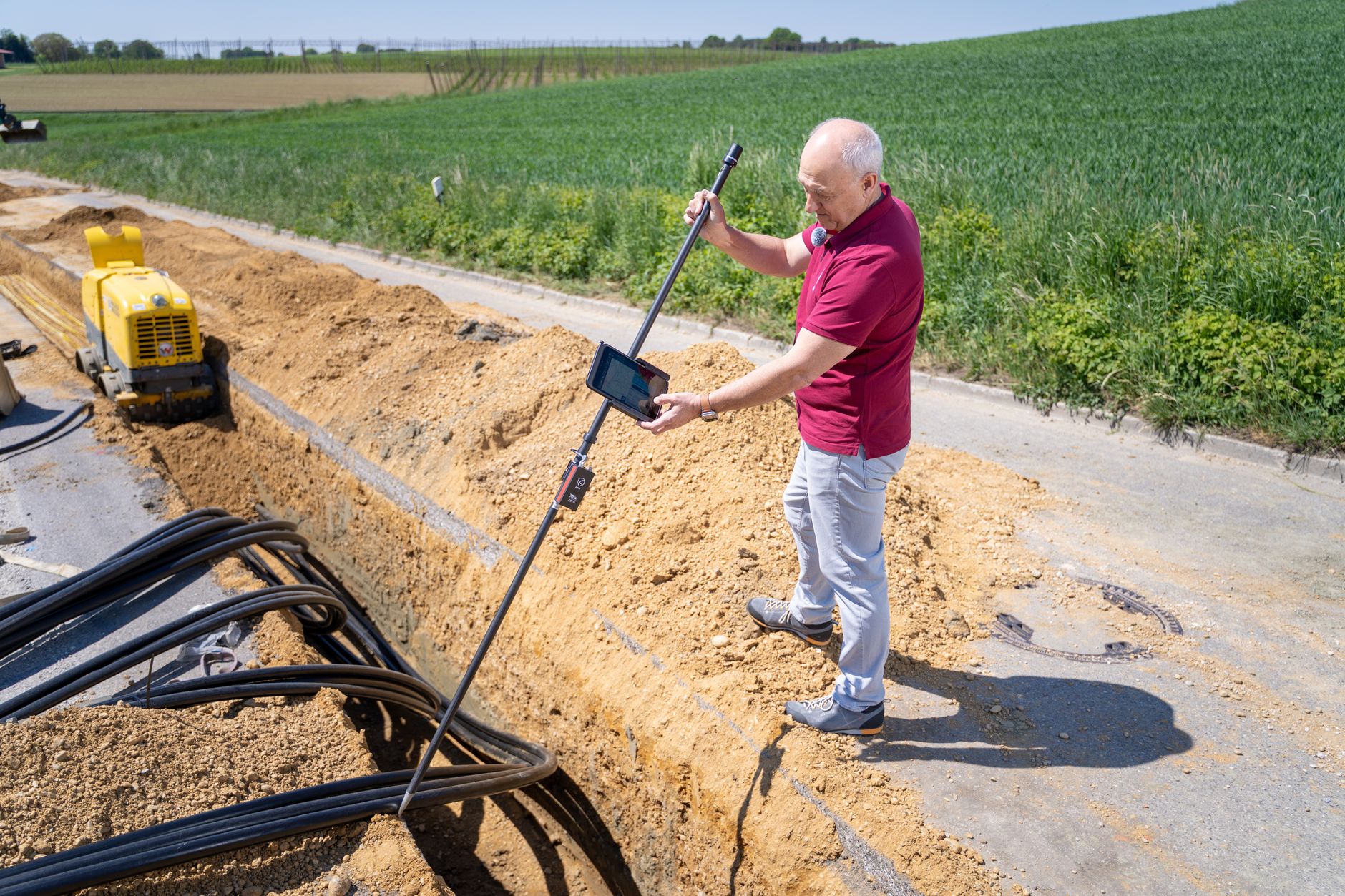
If a project requires a construction as-built survey of a buried utility, arrange the survey while the relevant installation is still visible and accessible. Before backfill, the contractor, design lead, and surveyor should agree on which features need measurement, what record the owner or jurisdiction expects, and when the trench will be ready. A later surface visit may not recover the same information.
Start with the actual record requirement
“Utility as-built” is not one universal deliverable. The owner, engineer, utility provider, permit condition, or contract may specify different features, file formats, and review steps. Obtain the applicable requirement and send it to the surveyor before setting a field date. If no written requirement is available, ask the responsible design or owner representative to define the needed record instead of guessing.
This article is about timing an already-scoped utility observation. For the broader question of when an as-built survey is required in Washington, identify the governing project document or agency request first.
Define what must remain exposed
List the utility segments and features to be recorded, using the project’s naming and stationing where available. Depending on the assignment, the requested information may involve alignments, structures, connections, crossings, or elevations. The designer should specify which measurements answer the review question and whether any components will become concealed before adjacent work is complete.
Do not assume that a photograph, contractor mark, or design plan can substitute for a field measurement when a surveyed record is required. Conversely, do not ask a surveyor to certify materials, installation quality, or work they cannot observe through a survey. Keep the survey deliverable and any inspection or testing responsibility distinct.
Build a field window into the construction sequence
Give the surveyor advance notice of the planned installation and likely backfill window. Confirm the contractor’s contact, safe access, and which portion of the work will be open at the time of the visit. If the utility installation spans multiple workdays or crews, the team may need more than one observation; that should be discussed in the scope and schedule rather than discovered after the first trench is closed.
Changes matter. Send revised plans and identify field deviations before the visit so the surveyor knows what is being measured and how the record should label it. If the crew arrives before the relevant features are visible, or after they have been covered, the team must resolve the resulting gap rather than presenting a plan location as an observed condition.
Agree on the record and review path
Before backfill, clarify the expected field notes or deliverable, who will receive it, and whether the design lead needs to review the measured information before construction continues. The surveyor documents the selected observed conditions; the owner, engineer, contractor, and jurisdiction retain their respective review and acceptance roles. A survey does not by itself establish that the installed utility complies with every design or permit requirement.
A practical handoff is a written list of features, the controlling requirement, current plans, site contact, access and safety conditions, notice period, and delivery format. That lets the team schedule the right observation while the work is visible. The construction staking phase guide covers the separate layout work that precedes installation.